
Introduction
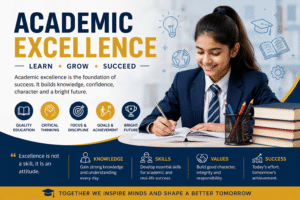
Academic excellence is one of the most important goals of every educational institution. It represents a commitment to high standards of learning, personal growth, and continuous improvement. Academic excellence is not only about achieving high grades; it is about developing knowledge, critical thinking skills, creativity, discipline, and a lifelong passion for learning.
In today’s competitive world, students need more than textbook knowledge to succeed. They require strong academic foundations, problem-solving abilities, communication skills, and confidence to face future challenges. Academic excellence helps students build these essential qualities and prepares them for higher education, professional careers, and responsible citizenship.
What is Academic Excellence?
Academic excellence refers to the pursuit of outstanding performance in education. It involves dedication to learning, consistent effort, intellectual curiosity, and a commitment to achieving one’s full potential.
Students who strive for academic excellence focus on:
- Developing strong subject knowledge
- Improving critical thinking skills
- Building effective study habits
- Maintaining discipline and responsibility
- Participating actively in learning activities
- Setting and achieving educational goals
Academic excellence encourages students to become confident learners who are prepared to succeed in various aspects of life.
The Importance of Academic Excellence
Academic excellence plays a significant role in shaping a student’s future. It provides a strong educational foundation that supports personal, social, and professional development.
Some key benefits include:
Improved Knowledge and Understanding
Students gain a deeper understanding of academic subjects and develop the ability to apply knowledge in real-life situations.
Strong Problem-Solving Skills
Through quality learning experiences, students learn how to analyze situations, evaluate information, and make informed decisions.
Increased Confidence
Success in academics helps students build self-confidence and motivates them to take on new challenges.
Better Career Opportunities
Strong academic performance often opens doors to scholarships, higher education opportunities, and successful career paths.
Personal Development
Academic excellence promotes responsibility, time management, perseverance, and leadership skills.
Characteristics of Academically Excellent Students
Students who achieve academic excellence often share several important qualities:
Commitment to Learning
They understand the value of education and remain focused on their goals.
Consistency
Regular study habits and continuous effort contribute to long-term success.
Curiosity
They actively seek knowledge and enjoy exploring new ideas and concepts.
Self-Discipline
They manage their time effectively and maintain a balanced approach to education and personal activities.
Positive Attitude
A positive mindset helps students overcome obstacles and remain motivated.
The Role of Teachers in Academic Excellence
Teachers are essential partners in a student’s educational journey. They inspire learning, provide guidance, and create engaging classroom experiences.
Effective teachers support academic excellence by:
- Encouraging active participation
- Providing personalized support
- Promoting critical thinking
- Using innovative teaching methods
- Creating a positive learning environment
- Motivating students to achieve their best
Dedicated educators help students discover their strengths and develop confidence in their abilities.
The Importance of a Positive Learning Environment
A supportive learning environment plays a major role in academic success. Students perform better when they feel safe, respected, and encouraged.
An effective educational environment includes:
Modern Learning Resources
Access to technology, libraries, and educational materials enhances learning experiences.
Collaborative Learning
Group activities encourage teamwork, communication, and problem-solving skills.
Student Engagement
Interactive lessons help maintain interest and improve understanding.
Emotional Support
Students who receive encouragement and support are more likely to achieve academic success.
Strategies for Achieving Academic Excellence
Students can improve their academic performance by following effective learning strategies.
Set Clear Goals
Establish specific academic objectives and create a plan to achieve them.
Develop Good Study Habits
Create a regular study schedule and maintain consistency.
Stay Organized
Keep notes, assignments, and study materials well organized.
Participate Actively
Engage in classroom discussions, ask questions, and seek clarification when needed.
Practice Time Management
Balance academic responsibilities with extracurricular activities and personal commitments.
Seek Help When Needed
Students should feel comfortable asking teachers, parents, or mentors for support.
Academic Excellence Beyond the Classroom
Academic excellence extends beyond traditional classroom learning. Students benefit from participating in extracurricular activities, competitions, community service, and leadership programs.
These experiences help students:
- Build leadership abilities
- Improve communication skills
- Enhance teamwork
- Develop creativity
- Gain practical experience
- Build self-confidence
A well-rounded education contributes to overall personal growth and success.
Preparing Students for the Future
The future demands individuals who can think critically, adapt to change, and solve complex problems. Academic excellence equips students with the knowledge and skills needed to thrive in a rapidly evolving world.
Students who pursue excellence become lifelong learners capable of contributing positively to society and achieving their personal and professional goals.
Education is not simply about passing examinations or earning certificates. True academic excellence involves developing intellectual abilities, strengthening character, improving communication skills, and building a lifelong passion for learning. Students who strive for excellence gain the tools needed to succeed academically, professionally, and personally.
Understanding Academic Excellence
Academic excellence refers to consistently achieving high standards in learning and personal development. It encourages students to maximize their potential and continuously improve their performance.
Academic excellence includes:
- Strong academic performance
- Effective study habits
- Critical thinking skills
- Creativity and innovation
- Leadership development
- Positive attitudes toward learning
- Responsibility and self-discipline
It is a holistic approach that focuses on the complete development of a student rather than academic results alone.
Why Academic Excellence Matters
Creating a Strong Educational Foundation
Academic excellence helps students build a solid foundation of knowledge across various subjects. This strong base supports future learning and enables students to understand advanced concepts more effectively.
Encouraging Lifelong Learning
Students who value academic excellence often develop a natural curiosity and enthusiasm for learning. They continue seeking knowledge throughout their lives, helping them adapt to changing environments and new opportunities.
Building Confidence and Self-Esteem
Success in academics increases confidence and motivates students to take on greater challenges. As students achieve their goals, they gain a stronger belief in their abilities and potential.
Expanding Career Opportunities
Employers and universities often look for individuals with strong academic backgrounds. Academic excellence can open doors to scholarships, higher education opportunities, internships, and rewarding careers.
Developing Essential Life Skills
The pursuit of excellence teaches students valuable skills such as time management, communication, teamwork, organization, leadership, and perseverance.
Characteristics of Academically Excellent Students
Students who consistently perform well often demonstrate certain qualities that contribute to their success.
Self-Motivation
Academically successful students understand the importance of education and take responsibility for their own learning.
Discipline
They maintain regular study schedules, complete assignments on time, and stay focused on their objectives.
Curiosity
A desire to explore new ideas and understand concepts deeply helps students become better learners.
Persistence
Challenges and setbacks are viewed as opportunities for growth rather than obstacles.
Positive Mindset
A growth-oriented attitude encourages students to embrace learning and continuously improve.
The Role of Schools in Promoting Academic Excellence
Educational institutions play a crucial role in creating environments where students can thrive academically.
High-Quality Teaching
Experienced and dedicated teachers inspire students to achieve their best and foster a love for learning.
Innovative Learning Methods
Modern teaching strategies encourage engagement, creativity, and critical thinking.
Supportive Learning Environment
Students perform better when they feel safe, respected, and supported by teachers and peers.
Access to Educational Resources
Libraries, laboratories, technology, and extracurricular opportunities contribute significantly to academic success.
Effective Strategies for Achieving Academic Excellence
Establish Clear Academic Goals
Students should identify their educational objectives and create practical plans for achieving them.
Develop Consistent Study Habits
Regular study sessions improve understanding, retention, and academic performance.
Practice Active Learning
Taking notes, participating in discussions, and solving problems actively engage students in the learning process.
Improve Time Management
Balancing academic responsibilities with extracurricular activities helps students remain productive and organized.
Seek Continuous Improvement
Students should regularly evaluate their progress and identify areas for development.
Embrace Feedback
Constructive feedback from teachers and mentors provides valuable guidance for improvement.
The Importance of Critical Thinking
Academic excellence is closely connected to critical thinking. Students should not simply memorize information but learn how to analyze, evaluate, and apply knowledge effectively.
Critical thinking enables students to:
- Solve complex problems
- Make informed decisions
- Evaluate information critically
- Adapt to new situations
- Generate innovative ideas
These abilities are essential for success in education and future careers.
Academic Excellence and Character Development
Education is not only about intellectual growth. Academic excellence also supports character development by encouraging values such as:
Responsibility
Students learn to take ownership of their actions and commitments.
Integrity
Honesty and ethical behavior become important aspects of academic success.
Respect
Students develop respect for teachers, classmates, and diverse perspectives.
Leadership
Excellence encourages students to become positive role models and leaders within their communities.
The Connection Between Academic Excellence and Future Success
Students who pursue academic excellence are often better prepared for future opportunities. They develop transferable skills that are valuable in higher education, professional environments, and everyday life.
Benefits include:
- Greater career prospects
- Enhanced communication skills
- Increased adaptability
- Better decision-making abilities
- Stronger leadership potential
- Higher levels of personal achievement
These advantages contribute significantly to long-term success and personal fulfillment.
Building a Culture of Excellence
Creating a culture of academic excellence requires collaboration among students, teachers, parents, and educational institutions.
Students
Students must remain committed to learning and continuous improvement.
Teachers
Teachers should inspire curiosity, encourage participation, and provide meaningful guidance.
Parents
Parents can support academic success by creating positive learning environments at home and encouraging educational goals.
Schools
Schools should provide quality education, modern resources, and opportunities for personal growth.
When all stakeholders work together, academic excellence becomes a shared achievement.
Challenges in Achieving Academic Excellence
While academic excellence offers numerous benefits, students may face various challenges such as:
- Academic pressure
- Time management difficulties
- Lack of motivation
- Distractions from technology
- Fear of failure
Overcoming these challenges requires resilience, support, and effective learning strategies.
The Future of Academic Excellence
As education continues to evolve, academic excellence will increasingly involve digital literacy, creativity, collaboration, and innovation. Future-ready students must combine strong academic foundations with modern skills that prepare them for a rapidly changing world.
Educational institutions that embrace technology, personalized learning, and skill development will continue to play a vital role in fostering excellence among students.